"That's Just Who I Am" — And That's Your Greatest Strength
How the VIA Character Strengths test is helping hundreds of people work with more confidence, energy, and joy.
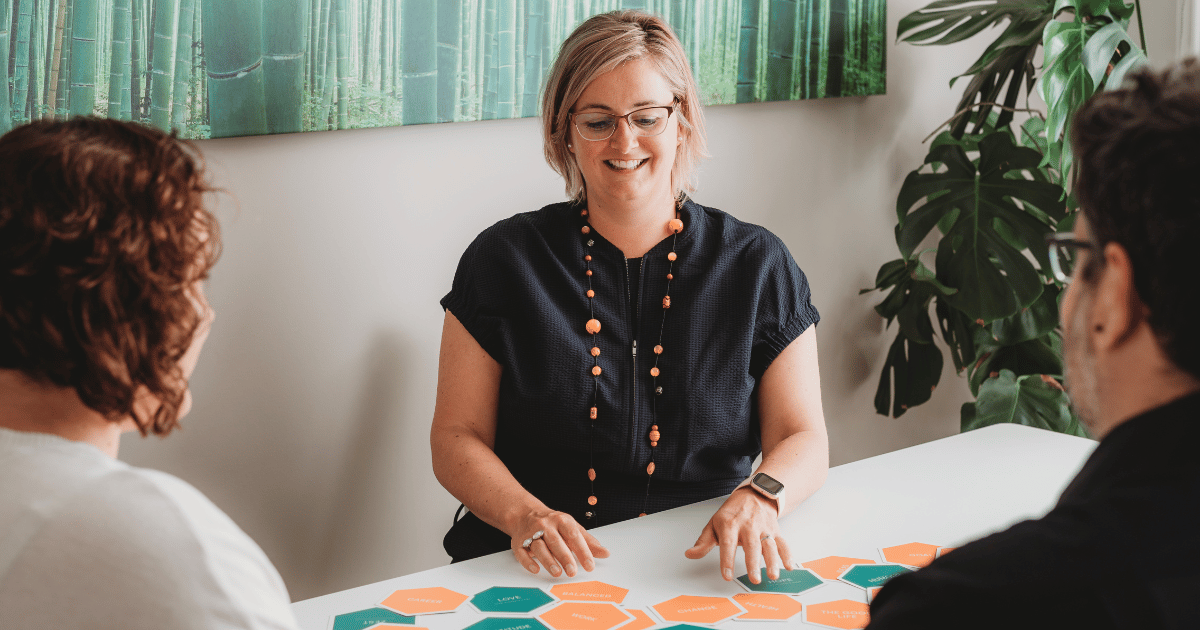
We live in a world obsessed with self-improvement. Fix your weaknesses. Close your skill gaps. Work on your blind spots. From performance reviews to leadership assessments, the message is often the same: you are a problem to be solved.
What if that's entirely the wrong starting point?
Over the past several years, I've guided more than 200 clients through a very different kind of self-discovery — one rooted in positive psychology, backed by over 25 years of global research, and powered by one of the most quietly transformative tools in the field: the VIA Character Strengths assessment.
The results, again and again, stop people in their tracks. Not because the results are surprising — but because they're not.
Not Another Personality Test
Before we go further, let me address the elephant in the room. Many of my clients have taken personality tests before. Myers-Briggs. DISC. Enneagram. And while these tools have their place, many people walk away from them with a label — introvert, Type A, Challenger — and a quiet sense of: OK, so now what?
Personality tests tend to put us in a box. Once we've been told we're an introvert or an extrovert, we often accept that as fixed — a life sentence, handed down by a questionnaire.
Strengths are fundamentally different.
Character strengths — as defined by the VIA framework developed by psychologists Martin Seligman and Christopher Peterson — are not about categorising your personality type. They're an expression of what is most deeply important to you as a person. Your values, in action. The 24 VIA strengths (from Creativity and Curiosity to Kindness, Leadership, and Perseverance) represent universal human qualities — and your unique ranking of them tells you something profound about how you naturally show up in the world.
Here's what I see happen, over and over, when a client reads their results for the first time.
They go quiet. They read it again. And then they say something like: "Well... that's just who I am."
And that — that small, almost dismissive sentence — is the aha moment. Because if this is who you are, naturally and without effort or performance, then your biggest asset isn't building a persona or developing a skill. It's bringing more of yourself, not less.
From Sceptic to Believer
I'll be honest: not everyone arrives open-hearted. Many clients come in mildly sceptical. They've been burned by assessments before, reduced to an acronym that didn't quite fit. They're willing to try, but they're not convinced.
What shifts them is rarely the science — though the science is compelling. It's the specificity. It's reading their top five strengths and recognising themselves so completely that they can't dismiss it. It's the description of Fairness or Love of Learning or Zest and thinking: How did it know that?
The answer is: because you told it. You answered honestly, and the tool reflected you back to yourself — clearly, and in language you wouldn't have chosen, but that fits perfectly. The strengths were always there. This just gave them a name.
Showing Up Authentically — In Interviews, In Leadership, In the Room

One of the most powerful applications I've witnessed is in career transitions and job interviews, a space where most people default to performance mode. They rehearse answers. They craft personas. They try to be what they think the employer wants.
One client came to me mid-job search, bright and capable but struggling to communicate her value. We spent time mapping her top strengths — a blend of energy-giving qualities like Creativity and Curiosity, alongside deeply social ones like Social Intelligence and Kindness. Together, we explored what those strengths actually looked like in her work: the problems she'd solved, the teams she'd rallied, the moments she'd been most alive in her career.
Then we did something unusual. We gave her strengths their own section on her CV. Not a list of buzzwords, but a confident, considered declaration of what she naturally brings. And she built success stories around each one: concrete, real, specific examples of those strengths in action.
The result? She walked into her interview not performing, but being. She knew exactly what she brought, she could speak to it with evidence, and she felt — perhaps for the first time in a job search — genuinely confident. Not because she'd rehearsed the perfect answers, but because she finally understood her own value.
This is what strengths-based interviewing looks like. And it works — because authenticity is compelling in ways that rehearsed personas never quite are.
Job Crafting: Finding Fresh Eyes on Work You'd Almost Given Up On
If the interview story is about stepping into something new with confidence, the job crafting story is about something equally important: staying. But staying differently.
Many of my clients who come to explore their strengths are experiencing burnout, or recovering from it. And burnout, as I've seen it, doesn't always mean the job is wrong. It often means that the connection between the person and their work has frayed. The meaning has gone quiet. The energy has drained. And the future feels hopeless in a way that's hard to articulate.
This is where strengths become a genuinely new lens.
Understanding how your strengths shape the way you think, feel, and engage with work gives you something burnout tends to strip away: perspective. It allows you to look at your job — the same job you were about to resign from — with fresh eyes.
“The key insight here is the relationship between strengths and energy. When we work from our top strengths, we tend to feel engaged, in flow, and energised. The opposite is also true: spending most of our day underusing our strengths, or working in ways that run counter to them, is quietly exhausting — even when the tasks themselves aren’t especially difficult.”
Job crafting is about identifying which parts of your work give you that energised, engaged feeling — and finding ways to do more of them. For some clients, this means protecting their mornings for deep focus work, when their minds are sharpest and their strengths of Creativity or Perspective can really breathe. For others — those whose top strengths are social, like Teamwork or Social Intelligence — it means being more intentional about connection: scheduling real conversations with colleagues, not just transactional check-ins, but genuine human moments.
These examples can sound almost too simple when written down. But I see, over and over, how these seemingly small shifts change the entire energy of a person's working day. The tasks haven't changed. The role hasn't changed. But the person's relationship to their work — and to themselves within it — has shifted profoundly. That's the power of job crafting grounded in strengths.
The Science Behind Our Strengths
The VIA isn't a trend or a wellness gimmick. It emerged from a rigorous, multi-year collaboration between leading positive psychologists, designed to answer a genuinely ambitious question: what does it mean to live a good human life, and what strengths make that possible?
The result was the VIA Classification of Character Strengths — 24 strengths, universally valued across cultures and traditions, measurable, developable, and linked to outcomes that matter: wellbeing, resilience, engagement, life satisfaction, and meaningful relationships.
Over 25 years of research has since expanded the evidence base. Studies show that people who use their strengths daily report higher levels of positive emotion, lower levels of burnout, and greater sense of purpose. Strengths-based interventions have been applied in schools, clinical settings, corporations, and communities around the world. The free VIA survey has now been taken by millions of people globally.
But what the research can't fully capture is the human moment — the look on someone's face when they finally see themselves clearly, named and valued, perhaps for the first time. That part, I get to witness. And it never gets old.
The Difference Between Knowing and Using
Here's something I believe deeply, and that I think gets missed in the conversation about strengths:
Knowing your strengths is a beginning. Using them, that's where the real work happens.
The VIA gives you a map. But a map doesn't walk the journey for you. What I've found, working with hundreds of clients, is that the insights from a strengths assessment become truly transformative when they're explored with curiosity, applied to real challenges, and integrated into how you actually work and live — not just read once and filed away.
That's why I'm offering something new.
Ready to Go Deeper?
If you've never taken the VIA, I'd encourage you to start there. It's free, it takes about 15 minutes, and what it gives you is a genuinely new way of seeing yourself. You can take it at viacharacter.org.
But if you're ready to go further — to move from insight to action — I'm opening a limited number of spaces for a Strengths Deep Dive: a focused 90-minute coaching session designed to help you understand your strengths at a deeper level and apply them to one real, current work or career challenge you're facing.
Whether you're navigating a career transition, preparing for an interview, leading a team, recovering from burnout, or simply wondering how to bring more of yourself to your work — this session is designed to give you clarity, direction, and a concrete way forward.
You've always had these strengths. Let's make sure the world gets to see them.
I work with professionals and leaders who want to build careers and lives that feel as good as they look. If this resonated, I'd love to hear from you.