Relocation Is No Longer About Adventure — It’s a Strategic Life Choice
There is a new pattern showing up in my coaching practice. At first, I thought it might just be coincidence. A few clients here and there, mentioning a move abroad. But over the past few months, it has become something I can’t ignore.
Relocation.
Roughly half of my clients are based in Ireland. Around 10% are elsewhere in Europe (a number I’m always slightly surprised isn’t higher). And the remaining 40% are based in the United States. What’s striking isn’t just where people are coming from. It’s what they are now considering.
Across all locations, more and more people are not only exploring a career shift — they are also contemplating moving to a different country. Some are doing this independently. Many are navigating this alongside partners and families. And as anyone who has gone through it knows, relocation is not for the faint-hearted.
So I started paying closer attention. What is driving this?
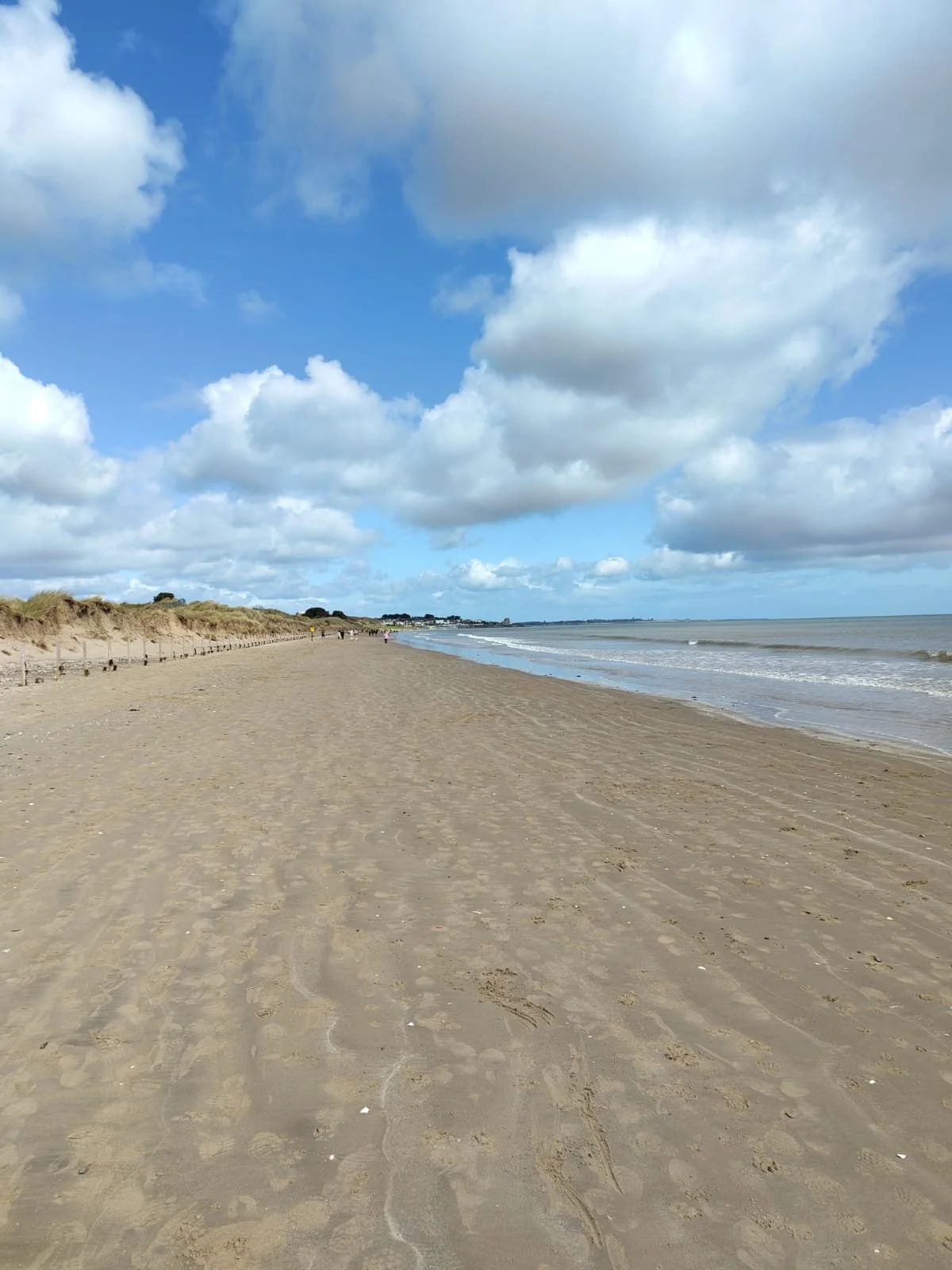
Portmarnock Beach in Dublin. One of my favourite places to reflect on change. There’s something about the movement of the sea that makes big decisions feel both lighter and more possible — a reminder that transition is part of life, not a disruption of it.
What’s Beneath the Desire to Move
For my American clients, the motivation is often explicit. Many are looking to step away from the current political climate and are drawn to Europe as a place that feels, at least comparatively, more stable. But this isn’t just a US phenomenon. I’m seeing similar reflections from clients based in Ireland and across the EU.
A World Already on the Move
Despite political narratives that often frame migration as crisis or exception, the reality is that movement across borders has been steadily increasing. According to the OECD, around 6.2 million people migrated permanently to OECD countries in 2024, a figure that remains 15% higher than pre-pandemic levels. Even with a slight recent slowdown, migration has not returned to “normal.” Instead, it seems to have settled into a new baseline — one shaped by post-pandemic mobility, geopolitical instability, and shifting labour markets.
What stands out in the data is not just the scale, but the composition.
Family reunification remains the largest driver of migration
Humanitarian migration is rising
Labour migration has become more volatile, reflecting economic uncertainty
In other words: people are not just moving for opportunity. They are moving in response to instability, connection, and necessity.
The Personal Layer Beneath the Statistics
This is where the data meets what I hear every week in coaching conversations. Because while statistics can tell us how many people are moving, they don’t fully capture why it feels different this time. Across my client base — whether in Ireland, across Europe, or in the United States — relocation is increasingly tied to a deeper evaluation of life conditions. .
I tend to work at the intersection of career fulfilment and climate change. My marketing friends call it a ‘niche’. I call it a necessity.
Even as governments soften or delay climate targets, individuals are paying attention — especially mid-career professionals and younger generations. They are noticing what’s already changing on the ground, in the place they work and live in. And they think about the future. That long-term, systemic awareness is shaping decisions in very tangible ways.
The Real Drivers Behind Relocation
Here are some of the themes I’m seeing emerge:
Climate concerns are becoming personal.
When people in Ireland start questioning long-term food security or resilience, it shifts relocation from a “maybe someday” idea into something more immediate.
Skills and purpose don’t always align with local opportunities.
I work with many people who have intentionally built climate-related skills, expertise and careers. When meaningful roles aren’t available locally, they look elsewhere — not out of restlessness, but out of a desire to contribute where they are needed.
Cost of living is reshaping priorities.
Even those in well-paid roles are reaching a point where financial pressure outweighs quality of life. When housing costs consume the majority of income, relocation becomes a practical consideration rather than a radical one.
A deeper search for community and belonging.
People are asking: Where can I participate? Where can I contribute? Where does life feel sustainable — not just financially, but emotionally and socially?
What I’m learning is this: Relocation today is rarely driven by a sense of adventure alone. It is not about chasing novelty or ticking off a bucket list destination. It is a strategic move — shaped by systemic awareness, personal values, and a desire to build a life that feels viable in the long term. It’s about aligning where you live with how you want to live. And that’s a very different kind of decision.
If You’re In the Middle of This
If you’re currently considering a relocation, but feeling overwhelmed by the complexity of it all — that’s completely understandable.
Relocation isn’t just a logistical challenge. It touches identity, relationships, career direction, and your sense of stability.
This is exactly where coaching can help — creating space to think clearly, weigh options, and move forward in a way that feels grounded and intentional.
If that kind of support would be useful, you’re very welcome to explore it further and book a clarity call with me.